


Best Beginner Pottery Glazes: Easy Glazes to Start With!
Just getting into glazing and utterly blown away by all the choices? The color options seem endless - we know! We've rounded up our top glaze recommendations for beginners, helping you create beautiful results with confidence.
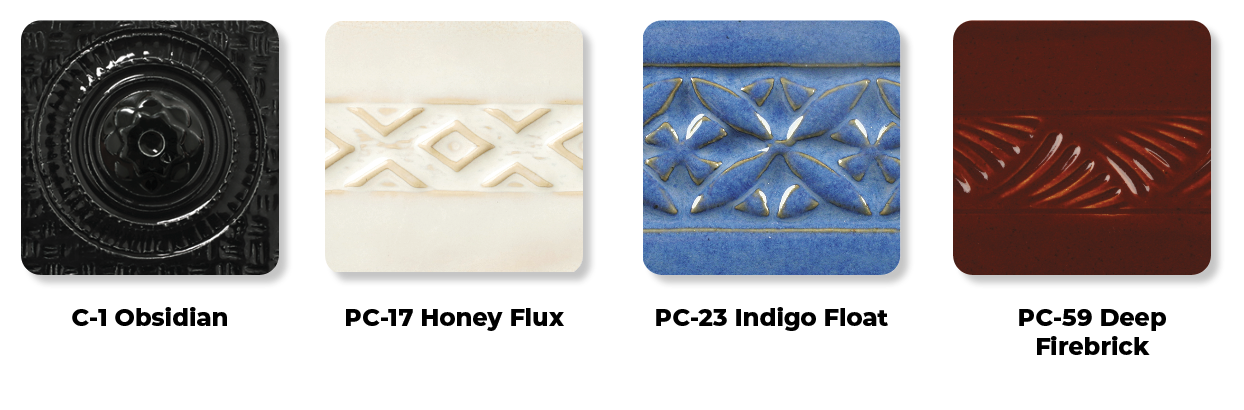
Starting out strong with these four trusted classics: C-1 Obsidian, PC-17 Honey Flux, PC-23 Indigo Float, PC-59 Deep Firebrick. These four glazes are all stable, so they won’t run onto your kiln shelf, and apply easily. Also, this selection gives you options for using them together!
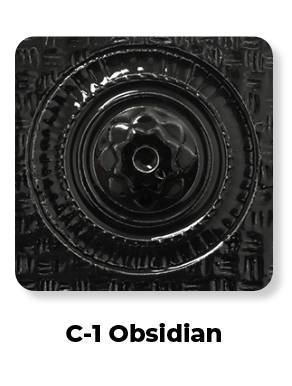
C-1 Obsidian is one of our most popular glazes, and it’s easy to see why! This opaque, glossy black is super stiff, so it won’t run, making it a great choice when you want a crisp line or don’t want to worry about glaze running. Obsidian brushes on smoothly. A thinner application will show some texture. Obsidian is a great base for layering with the other glazes on this list.
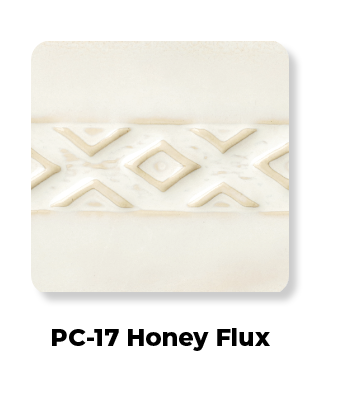
PC-17 Honey Flux is our most popular glaze! It’s a creamy, warm glaze that shows a peachy tone at cone 5 and a lighter, almost white color at cone 6. By itself, it’s stable and unlikely to run. It’s beautiful on textured or smooth surfaces and makes a lovely liner glaze for mugs and bowls. Layer it with any of the other glazes in this starter palette to get even more colors, but be careful for running when layering.
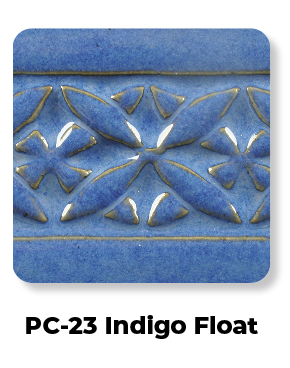
PC-23 Indigo Float, another popular glaze, is a bright, pleasing blue. If applied thinly, it may be gray or greenish. Three coats will give the best color. Use this glaze with texture or smooth surfaces; both are dramatic and beautiful.
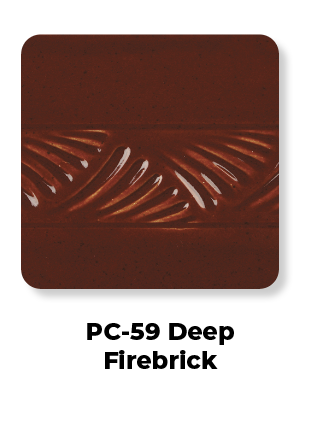
PC-59 Deep Firebrick is a deep red glaze with a subtle speckle that is easy to apply and always reliable. You’ll notice fine grit in the glaze when applying; it’s just the speckles. Deep Firebrick is a translucent deep red with minimal break on edges or texture, and very stiff, so you never have to worry about the glaze dripping.
These four trusted classic glazes are beautiful on their own—and even better when layered for endless creative possibilities. As your glazing journey grows, we recommend pairing these 4 glazes with other AMACO glazes to create unique color variations, depth, and surface effects that make each piece your own. C-1, PC-17, PC-24 and PC-59 all offer consistent, reliable results, making them a great choice for learning the basics of glazing while giving you plenty of room to experiment and grow your glazing skills.
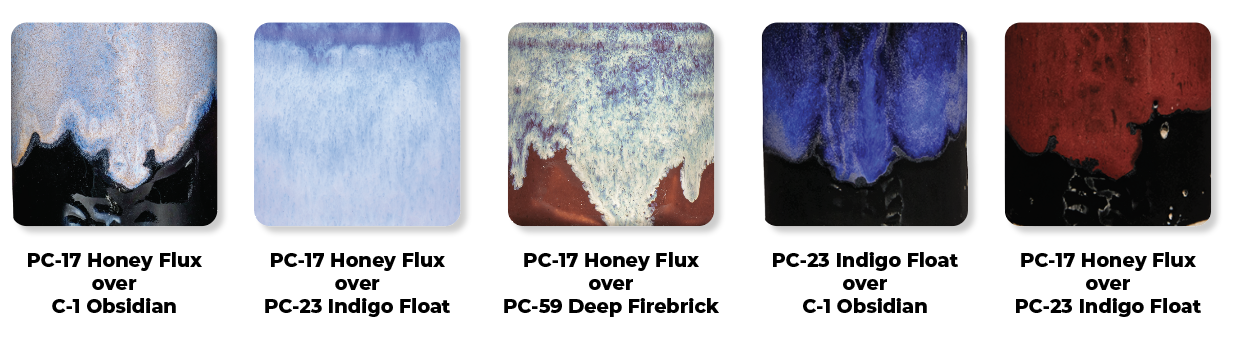
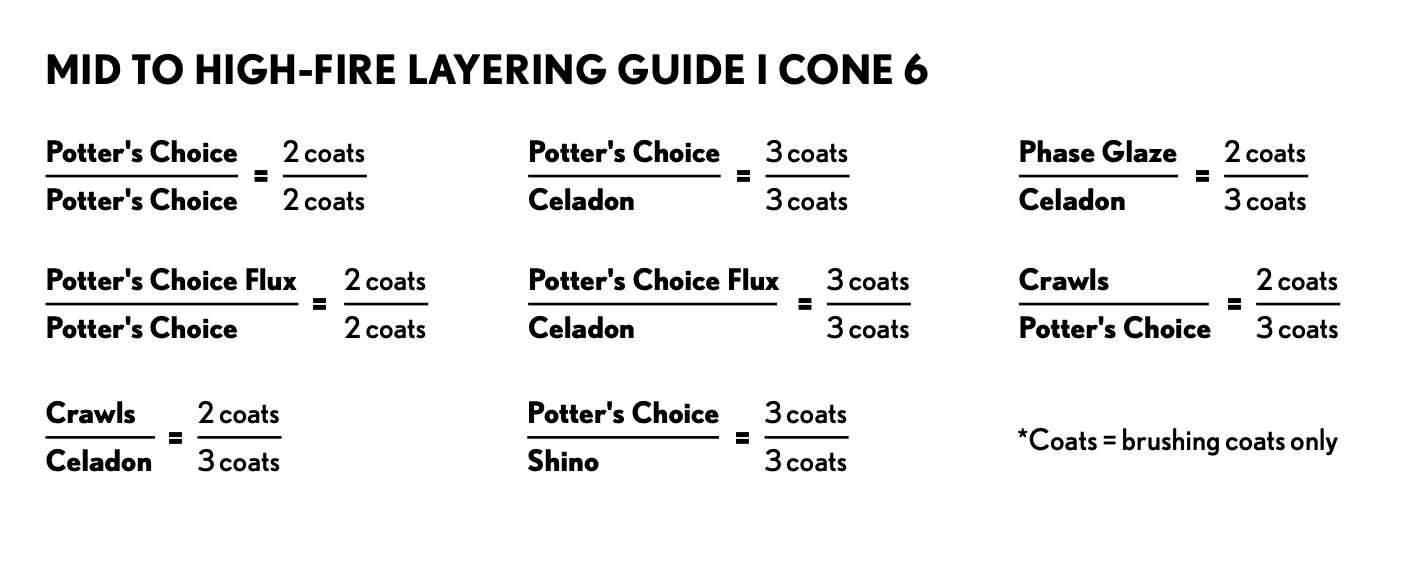
When layering glazes, be mindful that certain layering combos can cause more flow and movement. For all of AMACO's layering samples, we follow these layering guidelines and fire them all to cone 6 at medium speed, no hold. All of AMACO's layering examples are fired on AMACO No.11 A-Mix Stoneware Clay.
TIPS FOR BEGINNERS:
- Use a soft, fluffy fan brush for best results. Chip brushes, like those found in hardware stores, are also great for beginners.
- Apply each coat like spreading or “floating” the glaze on. If your brush drags on the ware, you need to reload. Too thin an application will look splotchy and uneven.
- Make a test tile for each new glaze before applying it to pieces you have spent a lot of time on. This way, you’ll have an idea of how heavy you need to glaze and what your results will look like during firing on your clay.
Want to expand a little more? Here are some alternate colors to use as you get started:
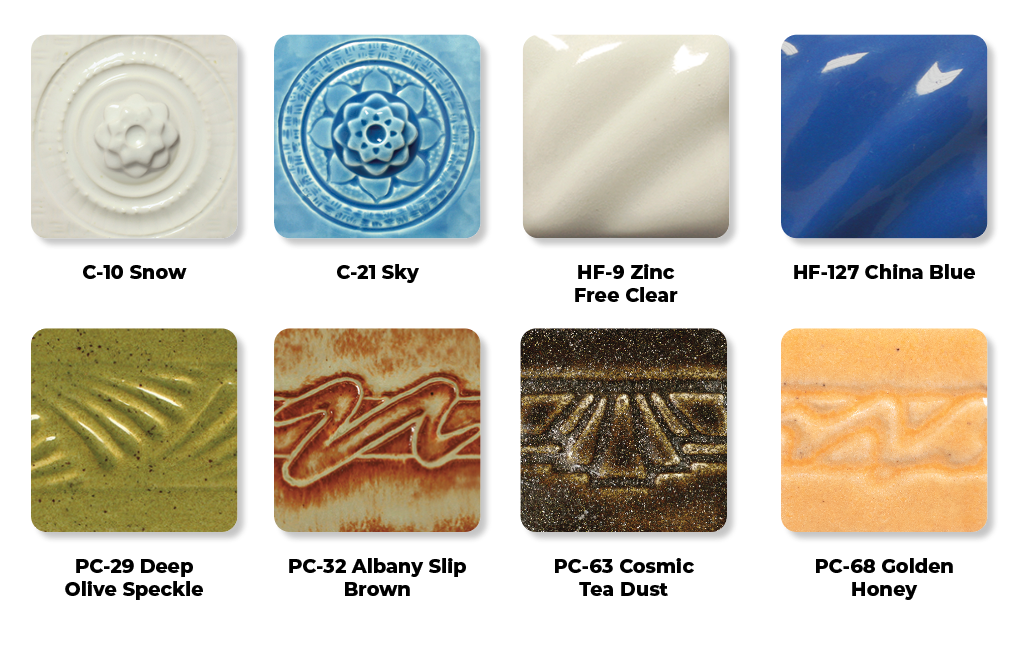
Try out these glazes to get started and share your glaze adventures with us on social media using #HowIAmaco
Happy Glazing!
Similar Reads
Layering with Potter’s Choice over Dipping & Layering Glazes!
Potter’s Choice is AMACO’s most popular glaze line for a reason—beautiful on its own and incredible when layered. Dipping & Layering (DL) glazes make the process faster and easier. Start with a DL base coat, add your favorite Potter’s Choice glaze, and achieve the layered looks you love with less effort.
Read More


Oil Spotting Effects with Celadon Snow!
Create visual texture with an “oil spot” glaze technique.
Read More